
Blog
Haldi: India’s Golden Spice and Why Quality Makes All the Difference

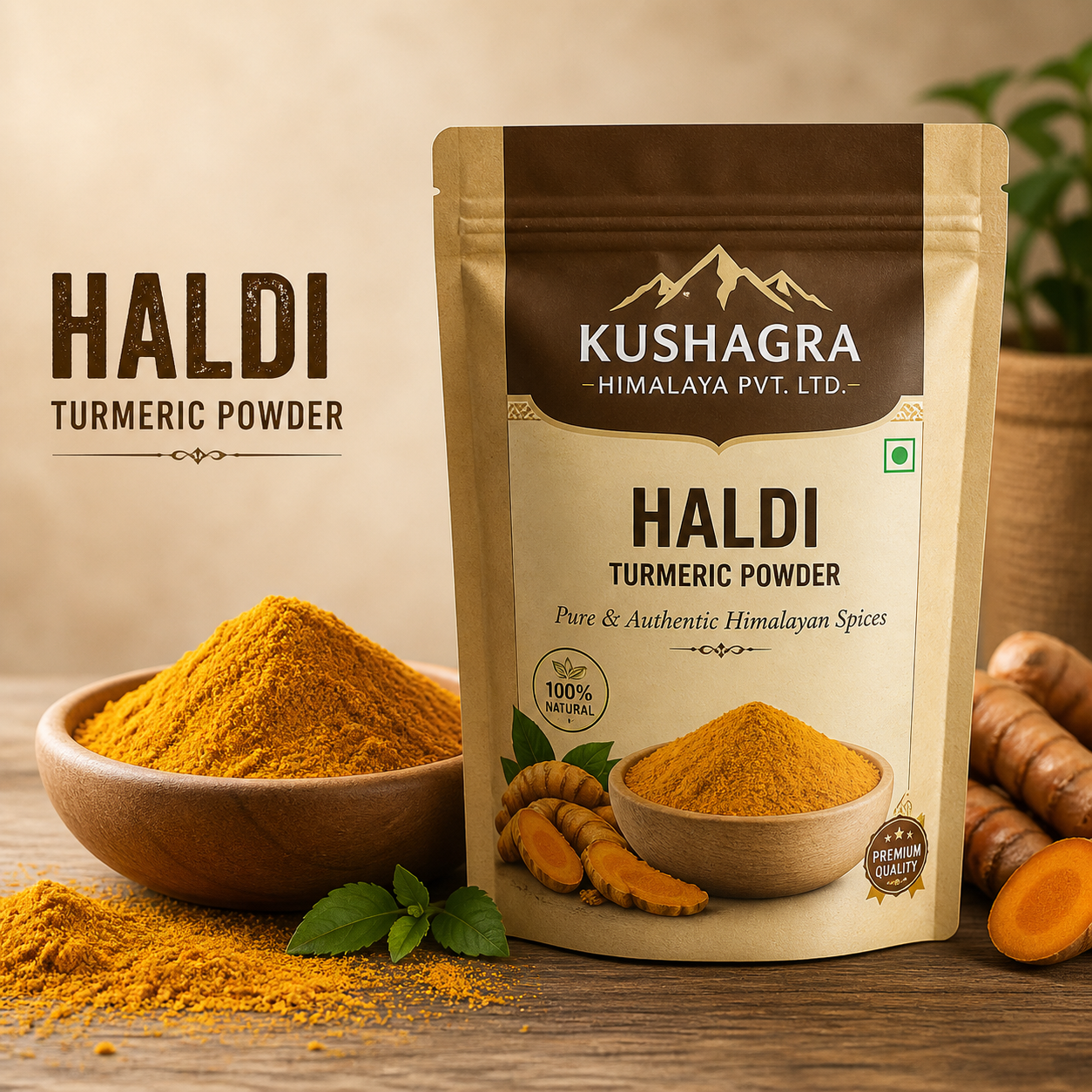
| Turmeric has been at the heart of Indian cooking and Ayurvedic medicine for over 5,000 years. Yet most people have never experienced truly pure, high-grade Haldi. Here is what you are missing. |
The Story of Haldi
Haldi — turmeric — is arguably the most important spice in the Indian kitchen. Its deep golden colour has coloured curries for millennia. Its earthy, slightly bitter warmth has defined the flavour of countless dishes from Kashmir to Kerala. And its active compound, curcumin, has made it one of the most studied natural health ingredients in the world.
Yet for all its importance, Haldi is also one of the most adulterated spices in the market. Reports of turmeric mixed with lead chromate (a toxic yellow dye), sawdust, rice flour, and cheap industrial fillers are not rare — they are alarmingly common. This is why the source and quality of your Haldi matters more than almost any other ingredient in your kitchen.
What Makes Himalayan Haldi Different?
Not all turmeric is equal. The curcumin content — the compound responsible for both the colour and the health benefits — varies dramatically depending on where and how the turmeric is grown.
Himalayan-origin turmeric, grown in high-altitude farms with mineral-rich soil and cooler temperatures, produces rhizomes with significantly higher curcumin concentration than plains-grown varieties. The result is a deeper colour, a more intense aroma, and a more potent health profile.
Kushagra Himalaya sources its Haldi directly from these premium growing regions. We clean, dry, and stone-grind the turmeric rhizomes in small batches to preserve maximum curcumin content — and pack it immediately in airtight, light-blocking packaging to lock in every bit of freshness.
Haldi in the Kitchen: How to Use It Well
In Curries and Dals
Add a quarter to half teaspoon of Haldi during the cooking of your onion-tomato base. Turmeric needs oil and heat to release its full colour and flavour — never add it raw to a dish at the end. Cook it for at least 60 seconds in oil before adding other ingredients.
In Rice Dishes
A pinch of Haldi added to the water when cooking rice gives it a beautiful golden colour and a subtle earthy warmth. It pairs beautifully with jeera (cumin) rice and is essential in many biryani recipes.
In Haldi Doodh (Golden Milk)
Heat one glass of full-fat milk. Add half a teaspoon of Kushagra Himalaya Haldi, a pinch of black pepper (which dramatically increases curcumin absorption), a small piece of ginger, and honey to taste. This ancient Ayurvedic drink has become a global wellness trend — and for good reason.
In Marinades and Rubs
Turmeric is an essential part of most Indian meat and vegetable marinades. Its antimicrobial properties also help in preserving the marinade and keeping the protein fresh. Mix with yoghurt, ginger-garlic paste, and spices for a complete marinade.
The Health Benefits of Pure Haldi
Turmeric’s health credentials are extraordinary — but only when the curcumin content is high and the spice is unadulterated. With pure Kushagra Himalaya Haldi:
- Anti-inflammatory support — Curcumin is one of the most powerful natural anti-inflammatory compounds known to science
- Antioxidant protection — Neutralises free radicals and boosts the body’s own antioxidant enzymes
- Immunity boost — Regular consumption supports a healthy immune response
- Digestive health — Stimulates bile production, aiding in fat digestion
- Joint health — Traditional Ayurvedic remedy for joint pain and stiffness
- Skin health — Used in face packs and skin preparations for its brightening and antimicrobial properties
Note: Curcumin is fat-soluble and its absorption is significantly enhanced when consumed with black pepper (piperine) and healthy fats. This is why Haldi has always been cooked in oil in Indian cuisine — our ancestors understood bioavailability long before nutritional science did.
How to Spot Pure vs. Adulterated Haldi
A simple test: dissolve half a teaspoon of turmeric powder in a glass of water. Pure turmeric will colour the water faintly golden and the powder will mostly settle. Adulterated turmeric (with artificial dyes) will turn the water a vivid, unnatural yellow and may leave an oily residue.
Pure Haldi also has a distinct, earthy, slightly bitter aroma. Adulterated versions often smell flat or chemical. When you open a fresh packet of Kushagra Himalaya Haldi, the aroma is immediate, rich, and unmistakably real.
| Kushagra Himalaya Haldi: Stone-Ground | High Curcumin | No Artificial Colour | No Fillers | 100% Pure Himalayan Turmeric |
Why Every Kitchen Deserves Better Haldi
Haldi is in your food every single day. It colours your dal, your sabzi, your chicken, your rice. It goes into your body — and your children’s bodies — daily. Of all the spices to invest in quality, Haldi is the most important.
Kushagra Himalaya Haldi is not just a spice. It is a daily health choice. A daily act of care for the people you cook for.
| Choose pure. Choose Himalayan. Choose Kushagra Himalaya Haldi. |
